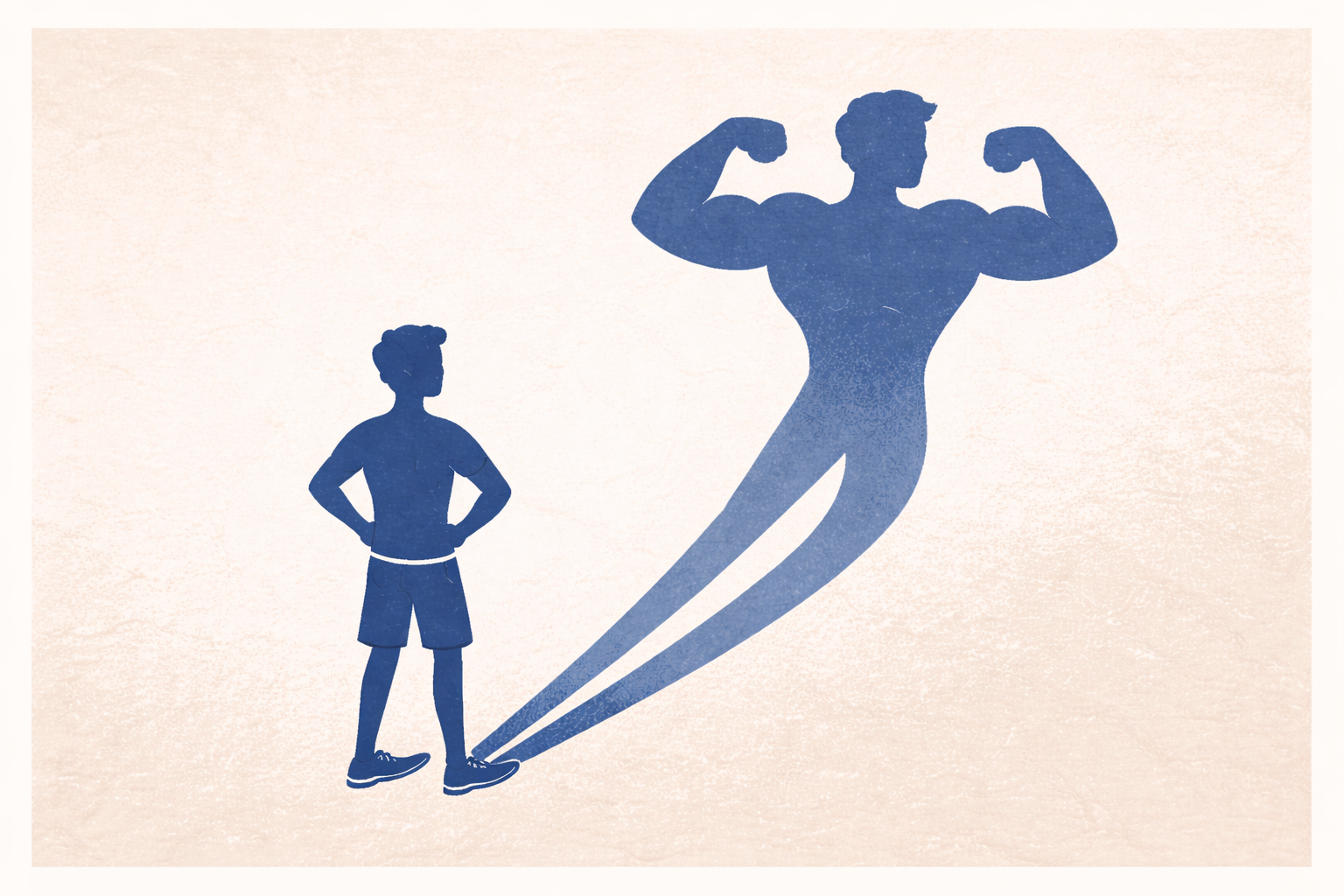
We often treat confidence as a mysterious weather pattern, something that either "shows up" or doesn't. We tell ourselves, "I’ll start that project when I feel more confident." But neuroscience suggests the opposite is true: Confidence is the byproduct of action, not the prerequisite for it.
In psychology, this is known as Self-Efficacy. It is the belief in your capacity to execute behaviors necessary to produce specific performance attainments. When you wait for a feeling to strike, you are giving away your power. Building self-trust requires you to treat yourself like a high-stakes business partner. If a partner broke every promise they made to you, you wouldn’t trust them. If you break every "time block" or "goal" you set for yourself, your subconscious registers that you are unreliable.
How to build the muscle:
- The Small Win Contract: Set a goal so small it’s impossible to fail (e.g., "I will write one sentence"). When you do it, you prove to your brain that you are a person who keeps their word.
- Review Your "Evidence Folder": We have a "negativity bias" that makes us forget our wins. Keep a list of three things you handled well today. Over time, this becomes the data your brain uses to support the claim: "I can trust myself."
Luna's Reflection: Trusting yourself doesn't mean knowing you will succeed; it means knowing you will be okay even if you don't. You have a 100% survival rate for every challenge you've faced so far. That isn't luck, that's a track record.